Transformation Through Research
It is important to further strengthen and expand rail transport in Germany and Europe as a key component of sustainable and functional mobility.
Particularly in rural areas, rail-based mobility offers many opportunities to reinvent itself as a reliable transport alternative. For this, society requires creative ideas and impulses that are supported by politics and jointly developed by research institutions and industry. This enables rapid implementation so that passengers can benefit from the new mobility solutions.
RailCampus OWL combines and expands the competencies required for this purpose. The clear objective is to create innovations within research projects and make the results usable in practice. The partners at RailCampus OWL focus on the research fields “Autonomous Rail Systems/Automation,” “Innovative Lifecycle Management,” and “Connected Transport Logistics for Passengers and Freight.” To achieve this, they possess outstanding expertise within universities and research institutions, among companies from the automation and IT sectors, the railway industry, as well as authorities and transport associations.
Current Research Projects
enableATO
The DZM project enableATO develops automated driving technologies for rail vehicles with a focus on innovative small-scale vehicle solutions. The goal is to research and test safe and sustainable mobility concepts for regional rail transport under real-world conditions. The focus is on modern sensor technology, digital control systems, and practical applicability.
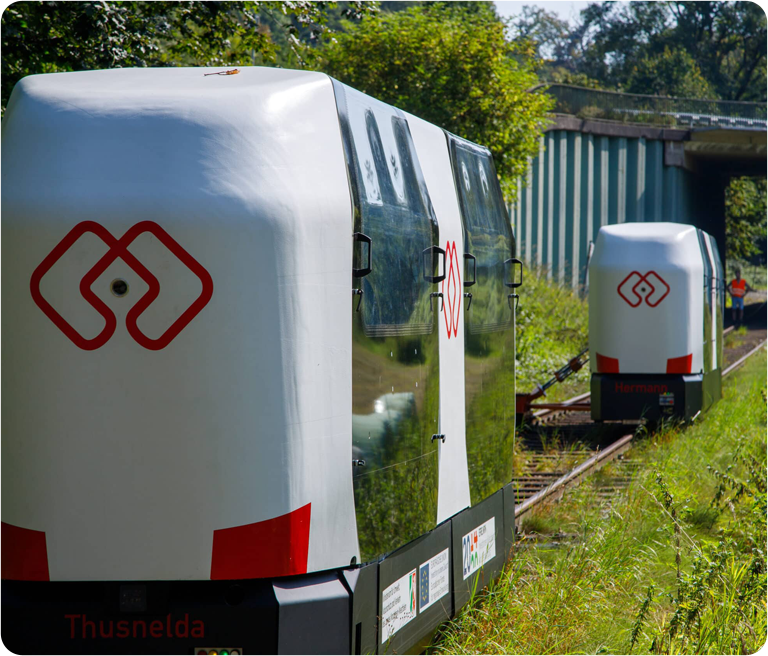
MONOCAB
MONOCAB develops an innovative vehicle concept for regional rail transport. The goal is to reactivate disused railway lines and create flexible mobility solutions for rural areas. The focus lies on sustainable mobility, autonomous technologies, and the economical use of existing infrastructure.
AuToRail OWL – Automated Transport of Road and Rail Goods OWL
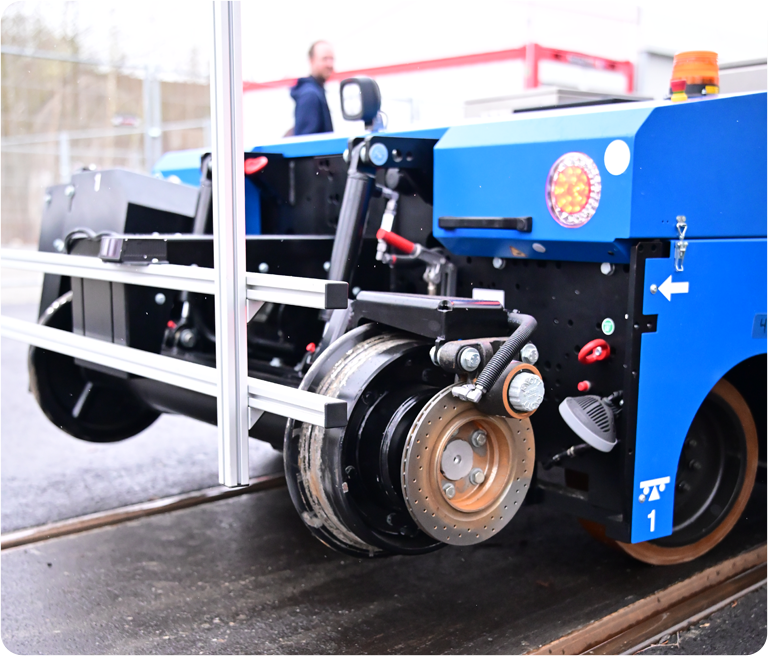
The AuToRail OWL project develops an automated dual-mode vehicle for flexible freight transport on road and rail. The goal is to efficiently connect both modes of transport and enable new logistics solutions. The focus is on the automated transition between rail and road operation.
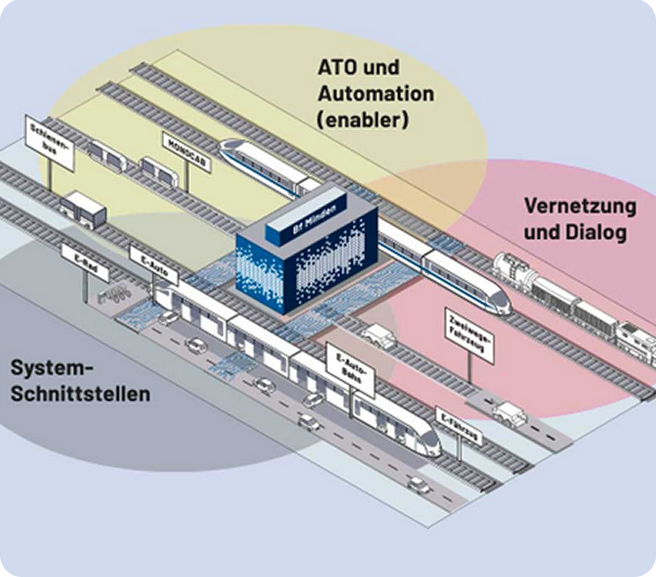
DiBaMi – Digital Railway Station Minden
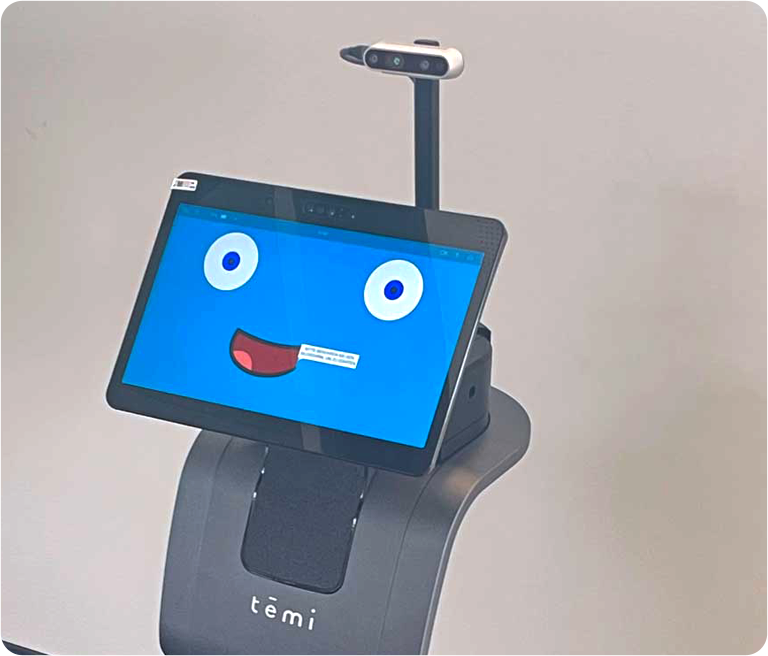
DiBaMi – Digital Railway Station Minden is a project in which measures are being developed to ensure seamless mobility flows and a pleasant stay at the railway station. Service robots support passengers with luggage transport, provide information, and enhance passenger safety, particularly at smaller railway stations.
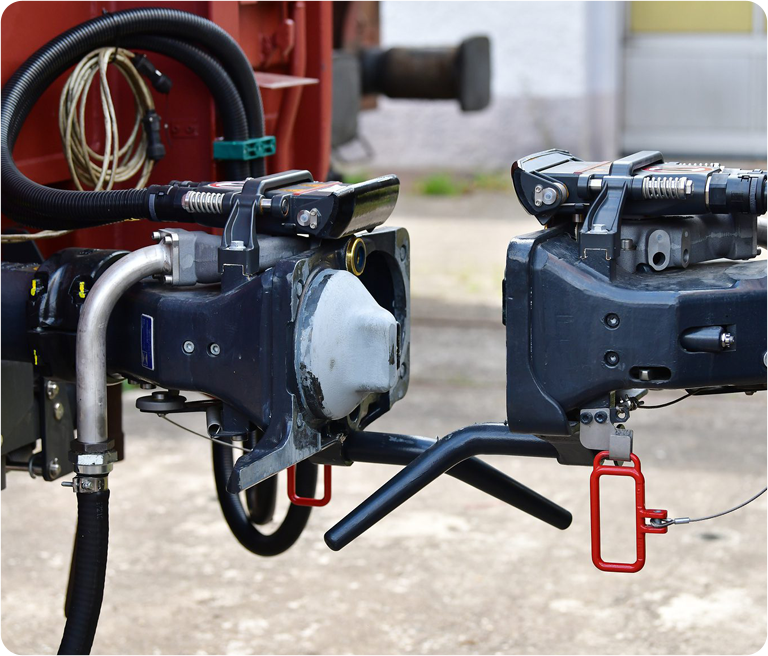
DAK – Digital Automatic Coupling
Several partners of RailCampus OWL are actively involved in testing the Digital Automatic Coupling (DAK). They helped equip a demonstration train within the framework of the BMDV project DAC4EU and have been intensively involved in researching the technology and its integration into rail vehicles. The companies involved in the project in Minden are DB Systemtechnik, DB Cargo, OWITA, and HARTING Technology Group.