AuToRail OWL – Automated Transport of Road and Rail Goods OWL
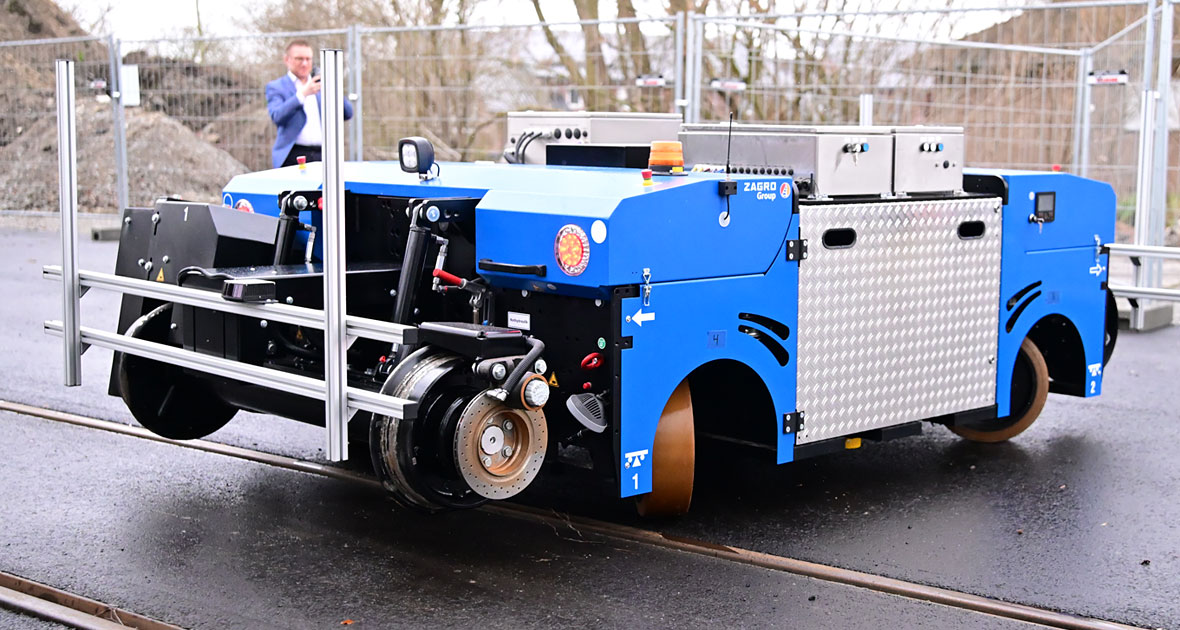
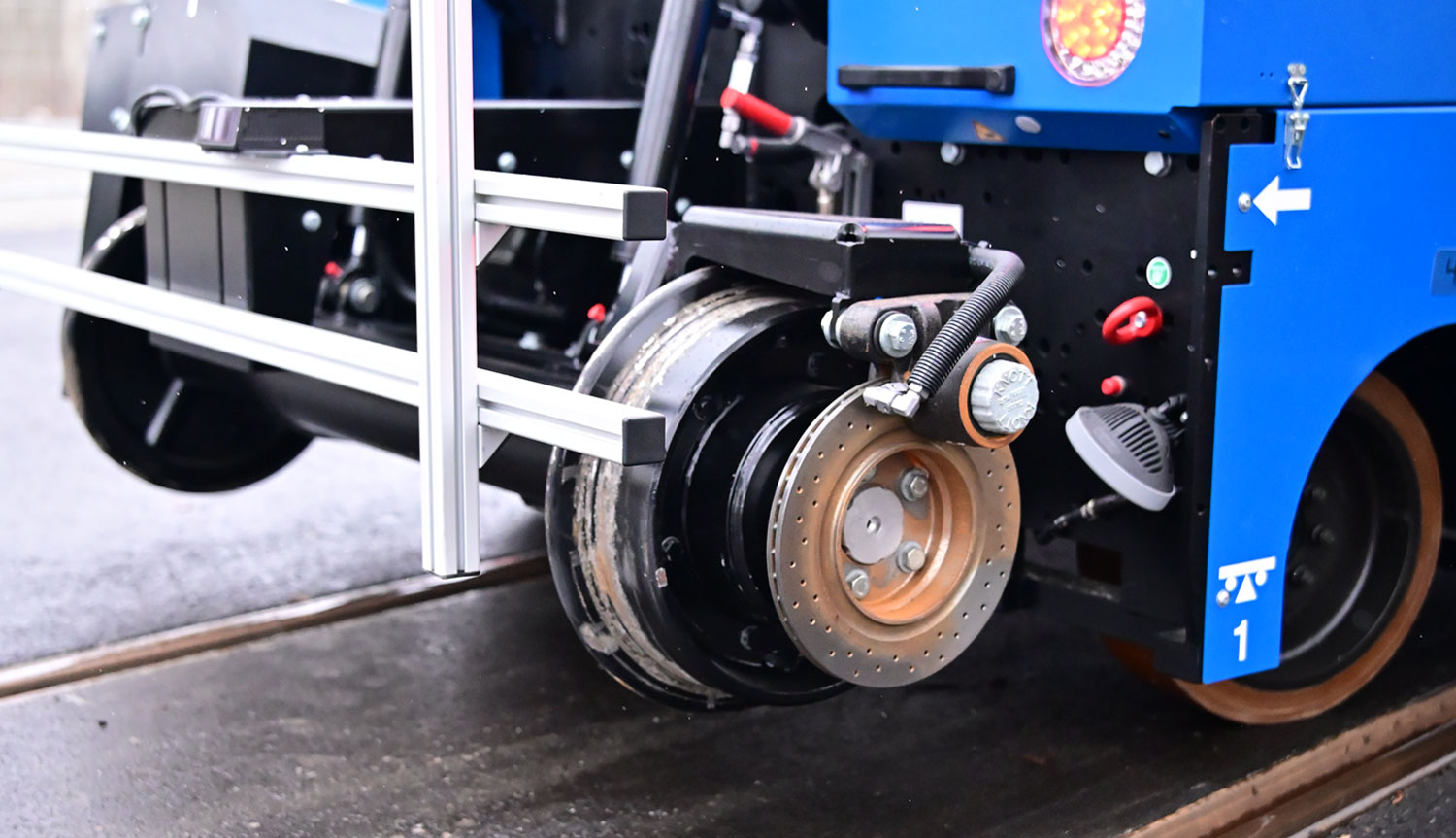
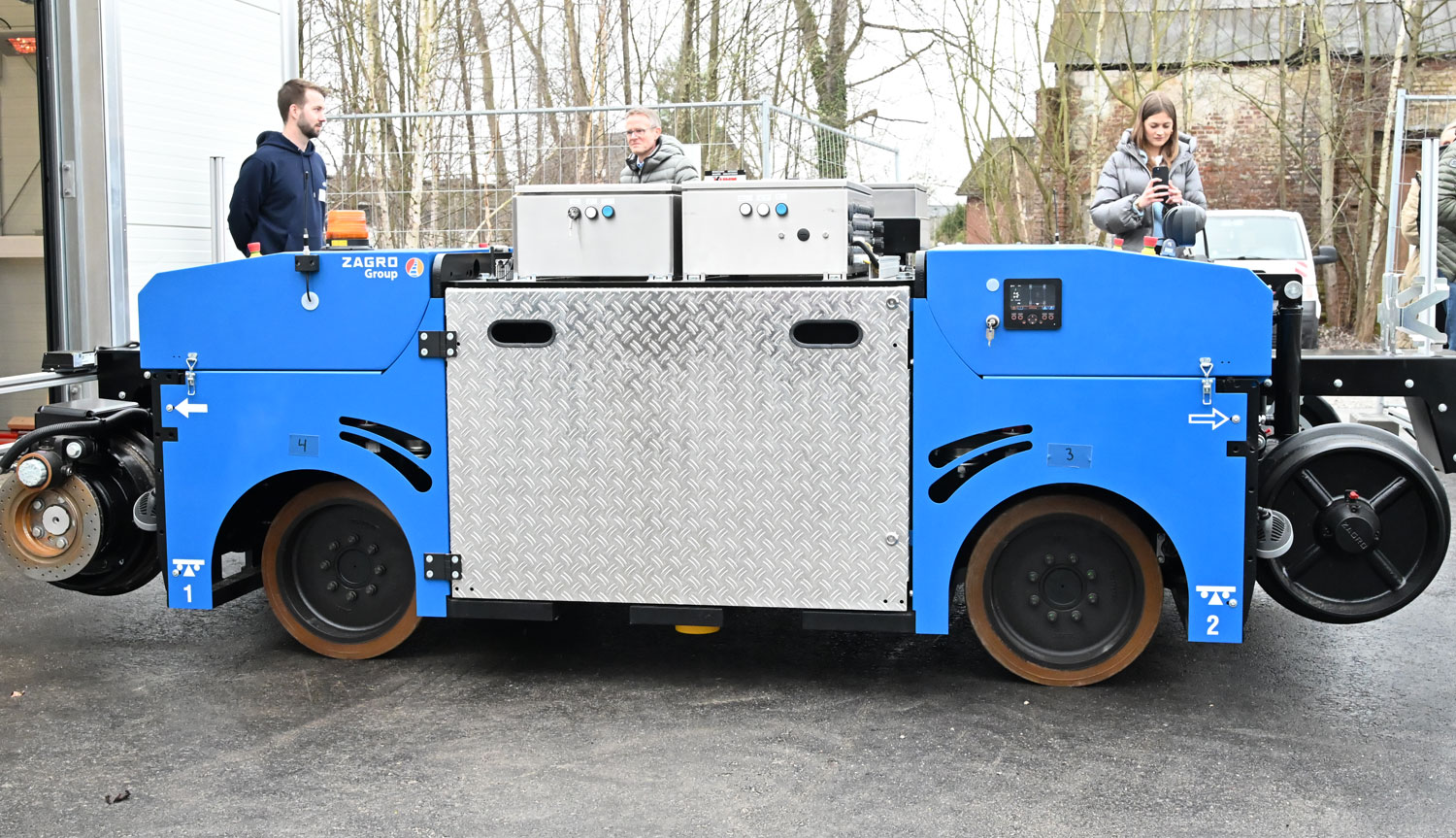
Within this project, a dual-mode vehicle is being developed that can operate in an automated manner both on rail and on roads. The core innovation of the project is the automated transition between the two transport modes.
Realization of the Project
The project “AuToRail OWL – Automated Transport of Road and Rail Goods OWL” develops a concept for a resource-efficient dual-mode vehicle for the transport of goods and, in the future, also passengers on both rail and road. The vision of the “AuToRail OWL” project is an automated rail vehicle that can also travel on roads. In this way, it could contribute to solving the “last-mile problem” and make the resource-efficient railway infrastructure accessible even for destinations without a direct rail connection: long distances are covered by rail, while sections without tracks are traveled on roads — and all of this without requiring dedicated additional infrastructure.
At the core of the project is the automation of the transition process between road and rail, and vice versa, in such a way that it can be carried out with minimal time loss. By avoiding additional infrastructure measures, future integration into the existing railway network is intended to be possible.
In this way, the advantages of road transport — including excellent access to industrial facilities — are to be combined with the advantages of rail transport, such as congestion-free and climate-friendly transportation, without the need for time-consuming cargo reloading.
The primary application of the vehicle is particularly focused on single-track railway lines in rural regions. Here, the dual-mode vehicle can make a significant contribution to the reactivation of unused railway lines. However, before practical deployment can take place, extensive development work must first be completed.
Data and Facts
The project is funded within the framework of the EFRE/JTF Programme NRW, REGIONALE Ostwestfalen-Lippe: Connected Mobility and Digital Applications. The total project volume amounts to EUR 2.3 million.
In addition to Bielefeld University of Applied Sciences (HSBI) as consortium leader, Bielefeld University, Technische Hochschule Ostwestfalen-Lippe, and Verler Immobilien und Wirtschaftsförderungsgesellschaft (VIW) are participating in the project.
Project Duration
01 January 2024 – 31 December 2026
Contact Persons
Henri Dieckmann, M.Sc.
– Research Associate –
henri.dieckmann@hsbi.de
Danus Rawert, M.Sc.
– Research Associate –
danus_kilian.rawert@hsbi.de

